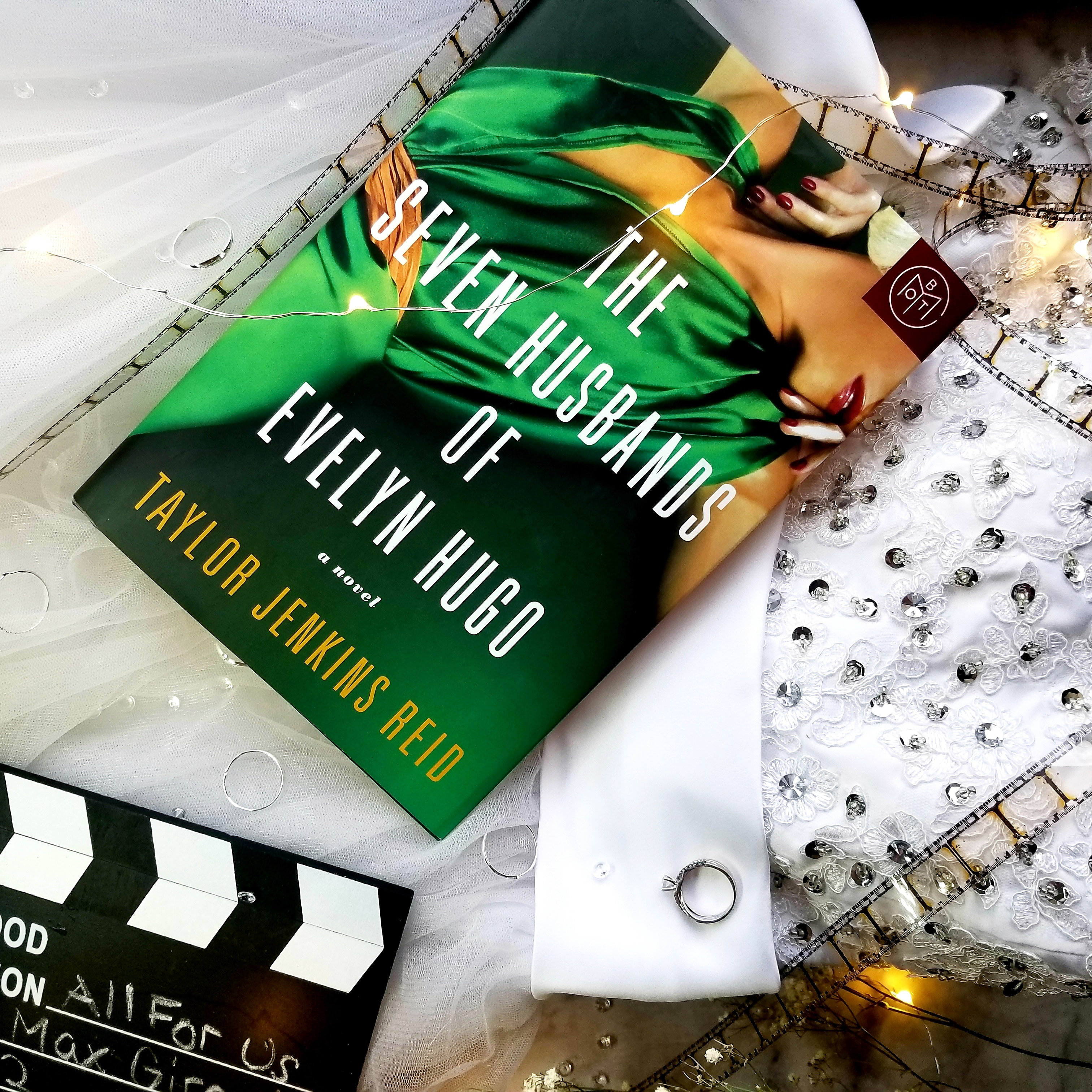
Review: The Seven Husbands of Evelyn Hugo by Taylor Jenkins Reid

Since I read this as an audiobook, the lovely picture used above is from Jenna M. Be sure to also check out her review of the book too!

Reading this was a unique experience for me: it was my first time listening to an audiobook! I found myself working at the same time, mind caught between the book and something else, not really enjoying either. But a book like this deserves better. It took me by surprise, delivered a few well-aimed and deliberate plot twists, and left me reeling.

“I have long operated under the idea that civility is subservience. But it hasn’t gotten me very far, that type of kindness. The world respects people who think they should be running it.”

Taylor Jenkins Reid

What worked for me

Glitz and grit of Old Hollywood: I believe that a fundamental human want is to know what celebrities get up to – whether they’re people, just like us, or whether our awe of them is justified. This book in no small way illustrates both the luxury of wealth, and its limitations. The characters attend the Oscars, go to lavish restaurants, and wear stunningly-described clothes. But none of it protects them from abuse, heartbreak or death. In fact, you get a sense of the pressure that a reputation like that of Evelyn Hugo (aka fictional Marilyn Monroe) would entail: a life under the spotlights means one with no perceivable flaws.

The real love interest: as would be expected, this story’s through line comes in romance. This is a story full of love, and yet you still unabashedly root for this one in particular to work out. It is another aspect not romanticised – the relationship has flaws that could signal its end, but wouldn’t necessarily onein real life. It keeps you on your toes, unabashedly hopeful and yet unsure if they ever will get their happy ending. Evelyn’s story has such an air of melancholy that you really do wonder if she’ll be left with a broken heart – and if you’ll end up with one on her behalf.

“Sometimes reality comes crashing down on you. Other times reality simply waits, patiently, for you to run out of the energy it takes to deny it.” 

Taylor Jenkins Reid

And… what didn’t

Repetitiveness: in a book with no fewer than seven love interests, and a main character consistently willing to marry for personal gain, the plot often became repetitive. The author asks you to suspend your disbelief and think ‘this time will be different’ a few many times; I found myself snoozing through the portions of the book where I can already tell what the ending would be. The writing was simply not captivating enough to pull you through those gaping filler stories.

Character development de Monique: I shouldn’t have been surprised that Evelyn Hugo was undoubtedly the main character of the story. Somehow, I was though – perhaps because it’s quickly revealed that she is not its narrator. The plot line revolving around narrator Monique, with Evelyn as an inspiration to be bold and act fiercely, serves as another uninspiring backdrop. This is to be expected, of course: comparing the highlights of a more than sixty years of life to a few weeks, one is bounded to not compare. I only wish the writer had realised the same.

Final review: 3.5/5 stars
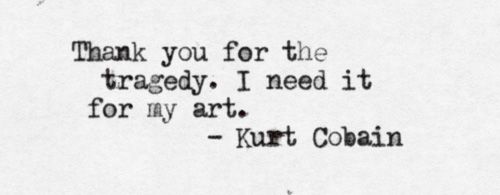
Two Responses to Kurt Cobain

on the bad days:

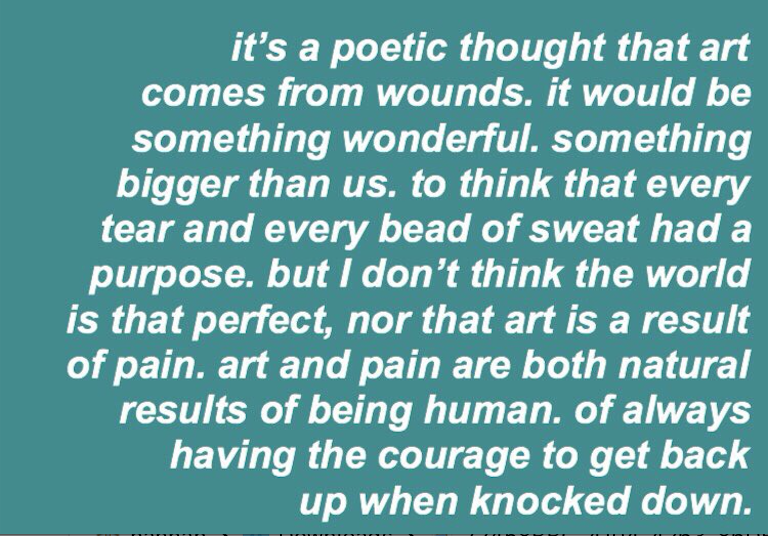
it hurts even worse on the bad days to see that other people can romanticise their mood – there is nothing creative, nothing beautiful or poignant and no lesson to be learned from my misery. it simply wallows and I wallow in it, until I can summon the strength to grab a shovel and start digging my way out.

on the good days:

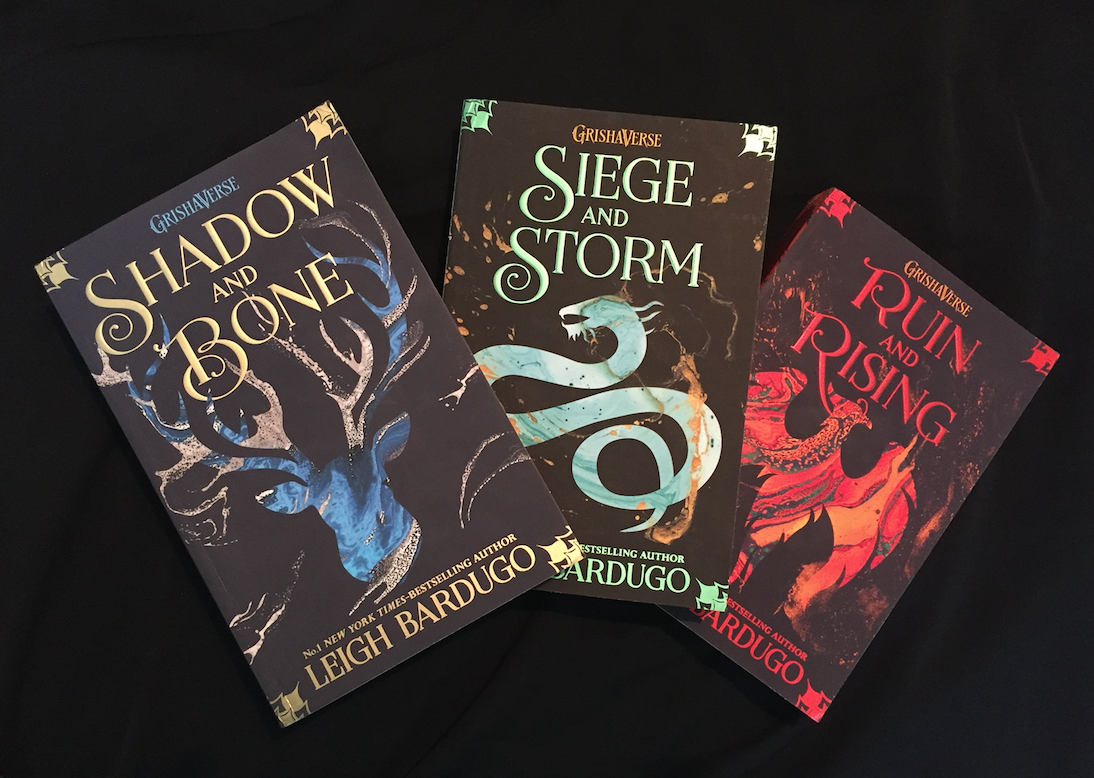
Review: The Shadow and Bone series by Leigh Bardugo

As an avid fan of Leigh Bardugo’s subversive ‘Six of Crows’ duology, I was thrilled to delve deeper into her ‘Grishaverse’. It was a no-brainer new favourite, yet I still stopped reading before finishing the first chapter. I was shocked to see I could already guess its plot: girl meets boy; boy introduces girl to a magical new world; girl falls in love; and girl powers up to defeat the big bad. It was only when I finally picked it up again that I realised how much of that is inverted here.

“Fine,” he said with a weary shrug. “Make me your villain.” 

Leigh Bardugo, Shadow and Bone

What worked for me

The villain: I’d argue that the protagonist gang of ‘Six of Crows’ is the closest in-universe comparison of this villain – emphasising the empathetic writing. An antagonist who’s both unlikable and ruthless, and strangely understandable in his loneliness, he is the key to keeping the series fascinating. There’s an interesting parallel too – a character foil – with another enterprising main character. This suggests how noble qualities such as ambition and a desire to protect can just as easily become flaws, depending on how far you would go to achieve your ideals. Perhaps a good person is simply one whose limits haven’t yet been tested.

Magic system: of everything I’ve read, the ‘Grishaverse’ has to have one of my favourite representations of magic. Grisha magic begins as a hard magic system, with definite categories of powers. Throughout the series, these ideas are subtly eroded to suggest that certain limitations to power may be self-defined, and therefore overcome. A certain character straddles the line between two orders of Grisha, and her powers are one of the most interesting of the bunch. In addition to this, magic is shown to have a profound and well-thought-out impact on religion, politics and culture. Bardugo’s world-building in this sense is unparalleled.

“What is infinite? The universe and the greed of men.” 

Leigh Bardugo, Siege and Storm

What almost worked

Debate on morality: With multiple characters with limitless, explosive power, ethics could’ve been the necessary puzzle piece to keep the books interesting even in its non-essential scenes. Though it is briefly debated, mostly characters seemed to see it as fairly black-and-white. An example of the ball being dropped in this is a monster type mentioned. They used to be people, and are implied to even still have some humanity; this could’ve led to a moral dilemma on whether killing them is acceptable. Yet, this is neatly glossed over and results in a plot thread with no conclusion.

“You are stronger, wiser, infinite in experience.” I leaned forward and whispered, my lips brushing the shell of his ear. “But I am an apt pupil.” 

Leigh Bardugo, Ruin and Rising

And… what didn’t

Undeveloped characters and romance: it’s been a long time since I couldn’t fully root for the main romance in a book like this. I found the main love interest intensely bland – especially when two other fascinating potentials are introduced. It’s told, rather than shown, that he’s cocky, and apart from his love, that truly seems his only defining quality. This may just be a symptom of a larger problem – unlike in Bardugo’s other books, the less important characters have no discernible spark of personality.

Lack of consequences: in a grave situation, and one later described as extremely bloody, almost every main character survives purely through the magic of plot armour. This is the risk of having multiple series following your book – most characters have to survive to continue it. The magic system comes close to being flat-out broken by being used for resurrection, raising a million plot holes. In all of this, it ends up with every character with two or less witty lines dead (in a failed attempt at emotional impact) with no fanfare, and every character with an emotional arc alive.

Final review: 4/5 stars

Time’s Up in 2019: where to go from here?

There’s no doubt you’ve heard of it: the #MeToo and Time’s Up movements have become national and international news in two short years. While #MeToo encouraged victims to speak up about their experiences with sexual harassment and assault to demonstrate prevalence, the Time’s Up movement took action against what had been shown to be an epidemic of sex-based crime.

One key thing to note here, is that while both movements have affected many, both were predominantly American enterprises. In fact, Time’s Up was started by Hollywood celebrities, which begs the question – what is Bollywood, and the rest of India, doing about the same problem?

It’s undeniable that Indian, and in general, Asian, culture has a conservative approach to women’s sexuality, and this can and has bled into their mentality regarding sexual assault. The fear of the social stigma that may come with allegations has lead to devastating consequences for women. 

A 2006 National Crime Records Bureau report estimated that unreported rape crimes made up 71% of all rape crimes in India, as opposed to the international UN estimate of 11%. This is in addition to the fact that marital rape is not yet considered illegal in India.

Personally, that’s quite unacceptable. High unreported rape would indicate a prevalence of those who would persecute a known survivor of these crimes, rather than help. As for marital rape – Time’s Up is engraining in us that no means no, no matter your relation, your clothing, or the circumstances. 

These dire facts point to only one fact: revolution is coming for this country. As more and more women, including some in Bollywood, continue to speak honestly about their experiences, we should expect to see this matter be taken seriously, worldwide, in our lifetimes.